The Magic That Happens When Musicians Come Together
Picture this: five kids who barely know each other walk into a practice room. There’s an awkward silence as they set up their instruments. The drummer counts off, and something transformative begins to happen. By the end of the session, they’re laughing, connecting, and already planning next week’s jam.
This scene plays out regularly at Let There Be Rock Schools in Leesburg, and it represents something much deeper than just making music. When young musicians come together to play, they’re not just learning chords and rhythms—they’re developing crucial life skills that will serve them well beyond the stage.
The Jam Session: A Miniature Society
Every band is essentially a tiny society with its own rules, challenges, and rewards. At Let There Be Rock Schools, we’ve witnessed thousands of students transform through the power of group music-making. There’s something uniquely powerful about creating music together that builds three essential life skills: empathy, confidence, and friendship.
Let’s break down exactly how this happens and why it matters so much for young musicians.
Empathy: Learning to Listen Beyond the Notes
In today’s increasingly disconnected digital world, genuine empathy can be hard to develop. Enter the jam session—perhaps the most effective empathy training ground available.
The Art of Musical Conversation
When students play in a band, they’re engaged in a musical conversation. Just like in a good discussion, musicians must:
- Listen attentively to what others are playing
- Respond appropriately
- Know when to take the spotlight and when to support
- Adapt to changing dynamics and emotions
This musical mind-reading is actually empathy in action. The skills developed through musical collaboration directly translate to better interpersonal relationships outside the practice room.
Non-Verbal Communication Masters
In a band setting, much of the communication happens without words. A nod from the drummer, a subtle change in the guitarist’s stance, or eye contact from the vocalist can signal important changes in the music.
Students who jam regularly become experts at reading body language and non-verbal cues—a skill that psychologists consistently rank as critical for emotional intelligence and social success.
Confidence: Finding Your Voice in the Mix
Nothing builds confidence quite like overcoming challenges alongside peers. In band settings, students experience both individual and collective growth that builds lasting self-assurance.
The Safety Net Effect
Making mistakes is inevitable in music, but the band environment provides what educators call a “psychological safety net.” When a student flubs a note during solo practice, it can be discouraging. But when that same mistake happens during a jam session, something different occurs:
- The music continues (life goes on!)
- Bandmates often don’t even notice minor errors
- Recovery becomes more important than perfection
- The shared experience normalizes mistakes as part of growth
From Bedroom Player to Performer
One of the most dramatic confidence transformations happens when students transition from practicing alone to performing with others. This journey from private player to public performer follows a natural progression at Let There Be Rock Schools:
- Personal practice: Building fundamental skills
- Small group sessions: Learning to play with others in a low-pressure environment
- Band rehearsals: Working toward shared musical goals
- School showcases: Performing for supportive audiences of family and friends
- Community performances: Taking their talents to the wider world
Each step builds upon the previous one, gradually expanding students’ comfort zones and building rock-solid confidence that extends into all areas of life.
Friendship: Bonds Forged Through Musical Fire
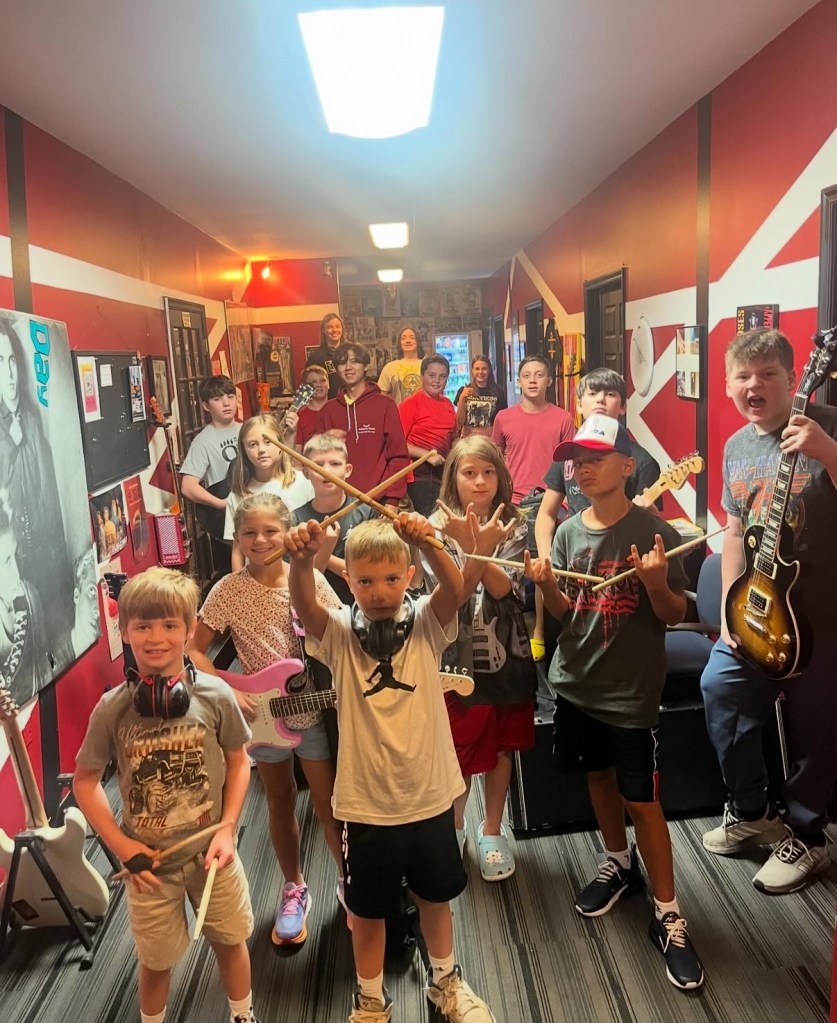
The friendships formed through making music together are often among the strongest and most enduring relationships in our students’ lives. There’s something special about the connections made when creating together.
Beyond Small Talk
Traditional social settings can be challenging for many young people. Small talk doesn’t come naturally to everyone, and finding common ground can be difficult. Music bypasses these obstacles by providing:
- An immediate shared interest and activity
- A common language (music) that transcends backgrounds
- Collaborative challenges that accelerate bonding
- Emotional experiences that create lasting memories
Diverse Connections
One of the most beautiful aspects of band friendships is how they often cross typical social boundaries. At Let There Be Rock Schools, we regularly see unlikely friendships form between:
- Students of different ages
- Kids from different schools who would never have met otherwise
- Young people with vastly different personalities and interests
- Students from diverse socioeconomic backgrounds
These cross-boundary friendships expand students’ worldviews and help them develop appreciation for different perspectives—another crucial life skill.
The Band Bond
Ask any adult who played in bands during their youth about those friendships, and you’ll likely see their face light up with nostalgia. There’s something special about “band friends” that stands the test of time.
Real Life Applications: How Band Skills Transfer
The skills developed through group music-making don’t stay in the practice room—they extend into every aspect of life.
Academic Benefits
Research consistently shows connections between music education and academic performance. The skills developed in band settings particularly enhance:
- Collaborative learning: Students become better at group projects
- Active listening: Improved focus and information retention
- Pattern recognition: Enhanced mathematical and sequential thinking
- Emotional regulation: Better stress management during tests and challenges
- Time management: Balancing practice schedules with other responsibilities
Career Readiness
Today’s employers consistently rank “soft skills” among their most desired qualities in new hires. The band experience develops many of these coveted attributes:
- Teamwork: Functioning as part of a cohesive unit
- Adaptability: Responding to unexpected changes
- Communication: Expressing ideas clearly and listening effectively
- Problem-solving: Finding creative solutions collectively
- Accountability: Being prepared and reliable for the group
The Let There Be Rock Schools Approach
At our Leesburg school, we intentionally foster these life skills alongside musical development. Our approach includes:
Structured Freedom
We provide enough structure to guide progress while allowing the creative freedom that makes music joyful. This balance helps students develop both discipline and innovation.
Varied Groupings
Students experience different band configurations throughout their time with us. This variety helps them adapt to new social dynamics and expands their musical horizons.
Performance Opportunities
From casual in-school showcases to community events, we create appropriate performance challenges that stretch comfort zones while setting students up for success.
Mentor Relationships
Our instructors model not just musical excellence but also the interpersonal skills that make great bandmates. This mentorship shows students what healthy musical collaboration looks like.
Community Focus
We create a school culture where everyone supports each other’s growth. Students learn that everyone has different strengths and that the goal is collective improvement, not competition.
Join the Band Family
The research is clear: group music-making builds essential life skills that serve young people throughout their lives. At Let There Be Rock Schools in Leesburg, we’ve seen countless students transform through their band experiences.
Whether your child is a beginner curious about music or an experienced player looking to take their skills to the next level, the band environment offers benefits that extend far beyond the notes they’ll play.
Life is a lot like a great jam session—it requires listening, contributing, adapting, and connecting with others. By developing these skills in the supportive environment of a rock school, students gain not just musical abilities but the emotional and social tools to thrive in every area of life.
Ready to see how band life can enhance your child’s real life? Visit us at Let There Be Rock Schools – Leesburg VA to learn more about our programs and see our student bands in action.
Because in the end, the most important things we learn in band aren’t just about music—they’re about becoming better humans, one jam session at a time.
 Let There Be Rock
Leave a comment